Eastern Youth Skills & Employment Compact
Five NVQ centres delivering construction, hospitality, ag-mech and ICT certs to 5,000 youth.
Summary
Eastern Province has the highest youth unemployment rate in the country. It also has emerging demand from coastal hospitality, the construction sector, and remote-services exports. The mismatch is bridgeable — but only through demand-led NVQ training delivered at scale and tied to employer pre-commitments. Five NVQ centres, 5,000 youth, 70% placement guarantee, four years.
The problem on the ground
Tamil and Muslim youth in particular face a triple bind: under-credentialed, under-networked outside their community, and over-targeted by Middle East migration recruiters offering low-wage construction or domestic-service roles. Local employment alternatives exist (hospitality on the Pasikudah-Arugam Bay corridor, construction services, BPO sub-contracting) but the pipeline from school-leaver to employed youth runs through certified skills that the local TVET system doesn't reliably deliver.
What the project actually does
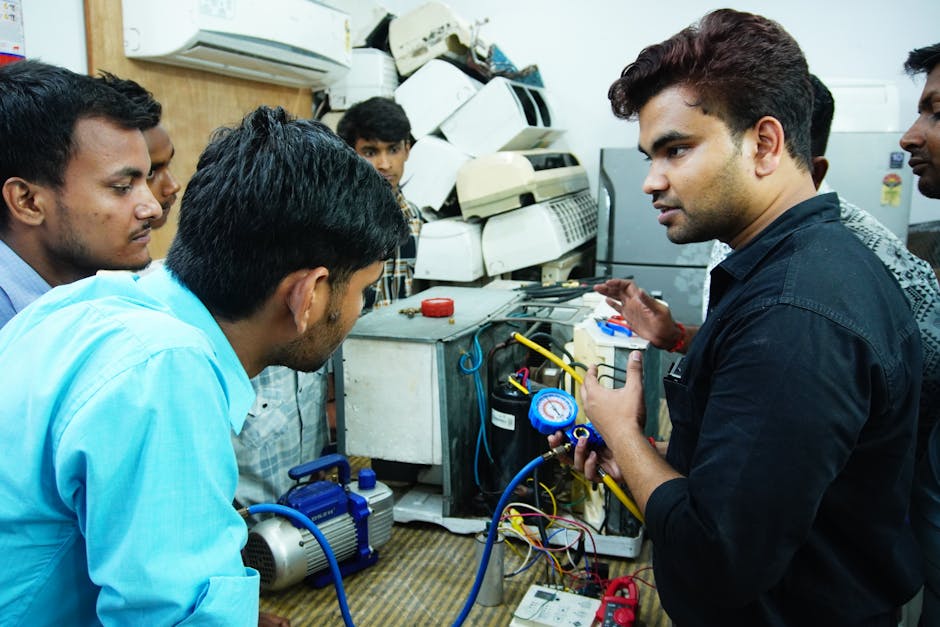
Five NVQ centres — Batticaloa, Trincomalee, Akkaraipattu, Kalmunai, Pottuvil — each running a curriculum specialised for the local demand profile. Construction trades at the inland centres, hospitality at the coastal centres, ag-mech bridged across both, and a remote-services/ICT track at the Batticaloa flagship centre. Demand-led: every cohort has named employer pre-commitments before training begins. PPP with two Canadian community colleges for curriculum quality review and external accreditation.
Market & demand
Hospitality on the Eastern coastal corridor will need ~3,000 trained workers over the next 5 years. Construction across the East absorbs ~2,500/year on infrastructure cycles. Remote-services (BPO, IT-BPM) opens 800-1,200 entry-level positions per year as Colombo firms test East-coast satellite offices. Total: enough demand for the project's 5,000 graduates and more.
Who benefits, and how
5,000 youth aged 16-30, distributed across districts and communities to mirror the underlying demographic mix. Women's enrolment minimum 35% across all tracks.
Impact across 20 lenses
Every project on this site is scored against the same 20 lenses. For each one we say how the project moves the needle, not just whether it does.
01. Rural Development
Direct · 2/35 centres distributed across 5 town-clusters in 3 districts.
02. Women Empowerment
Direct · 2/3Minimum 35% women enrolment; women-only cohorts in ag-mech (counter-stereotype track).
04. Employment Generation
Core · 3/35,000 youth placed in employment with 70% placement guarantee and 12-month retention support.
07. Economic Development & SME Growth
Direct · 2/3Trainees feed local hospitality + construction MSMEs as well as larger employers.
09. Technology & Innovation Integration
Direct · 2/310. Capacity Building & Skills Development
Core · 3/3NVQ-3 and NVQ-4 certification across hospitality, construction, ag-mech, ICT.
11. Public–Private Partnerships (PPP)
Core · 3/330+ named employer pre-commitments + 2 Canadian college partners + TVEC + NAITA + Provincial Ed.
12. Social Inclusion
Core · 3/3Tamil, Muslim, Sinhala youth represented; 35%-women minimum enrolment; war-affected youth priority cohort.
14. Financial Sustainability & Revenue Model
Direct · 2/3Placement-fee fund + Government TVET absorption pathway by Y5.
15. Measurable Impact (KPIs & Outcomes)
Core · 3/3Per-trainee outcomes tracked; 12mo retention; salary trajectory monitored.
16. Alignment with Donor Priorities
Core · 3/3Direct Canada-SL educational partnership; FIAP gender + trade-in-services priorities.
17. Scalability & Replicability
Core · 3/3Curriculum modules + accreditation partnership replicable across Northern, Uva, NW provinces.
19. Innovation & Competitive Advantage
Direct · 2/3Demand-led pre-commitment model is the genuine differentiator vs standard TVET.
20. Community Impact & Social Value
Core · 3/3Reduced Middle East migration pressure; local economic ladder for the next generation.
KPIs & targets
Financial model & sustainability
Centres are grant-funded for the four-year programme period. Employer-pays placement fees (8% of starting salary) build a sustainability fund. Government TVET budget absorbs centres from Y5 if performance KPIs are met.
Innovation & technology
Demand-led pre-commitment by named employers (before training begins, not after graduation) is the differentiator. Standard TVET trains in hope; this trains against a specific job request.
Partners & implementation
Public: Tertiary and Vocational Education Commission, NAITA, Provincial Department of Education. Private: 30+ named employers across hospitality, construction and remote-services; two Canadian community-college partners. Diaspora: Eastern Province alumni in Canada as a mentor and placement-introduction network.
Monitoring, evaluation & learning
Cohort completion rate; placement rate within 90 days of graduation; 12-month retention; starting and Y2 salary tracking; women's enrolment and outcomes tracked separately.
ESG safeguards
Sector-mix excludes exploitative recruitment chains. Equal-pay-for-equal-work commitments from partner employers. Independent grievance mechanism for trainees.
Donor alignment
Direct Canada-Sri Lanka educational partnership through community-college accreditation; FIAP-aligned gender-inclusion targets; trade-in-services beachhead through the remote-services track.
Scalability & replication
NVQ + employer-pre-commitment model is replicable across post-conflict / under-employed regions. Curriculum modules are open-licensable. Canadian-college accreditation partnership can scale beyond first five centres.
Gallery