Eastern Cashew Value Chain Programme
End-to-end smallholder cashew production, processing and export from Ampara & Trincomalee.
Summary
Sri Lanka imports about a third of the cashew kernel it consumes. Most of what is grown locally moves through Ampara and Trincomalee — and most of the value-add still happens elsewhere. This programme keeps the processing in the East. Over five years it brings 4,000 hectares of smallholder cashew into productive intercrop, sets up six women-led processing units in Sammanthurai, Akkaraipattu and Kantale, and lines up off-take agreements with Canadian and EU buyers who already pay a premium for traceable, smaller-grade kernel.
The headline number is income: a typical smallholder household lifts cashew earnings from roughly USD 280 a year to USD 1,150 by Year 5. The unsexy enabling work — soil mapping, grafted-clonal nurseries, kernel-grade machinery, a single export-licensed cooperative — is where the project actually lives.
The problem on the ground
Drive the A4 east from Pottuvil towards Trincomalee in February and the cashew trees are everywhere — old, scattered, mostly seedling stock from the 1970s and 80s. Yields hover around 300 kg/ha. Modern grafted material gets you to 1,200–1,500 kg/ha in the same dry zone. The genetic upgrade is decades overdue.
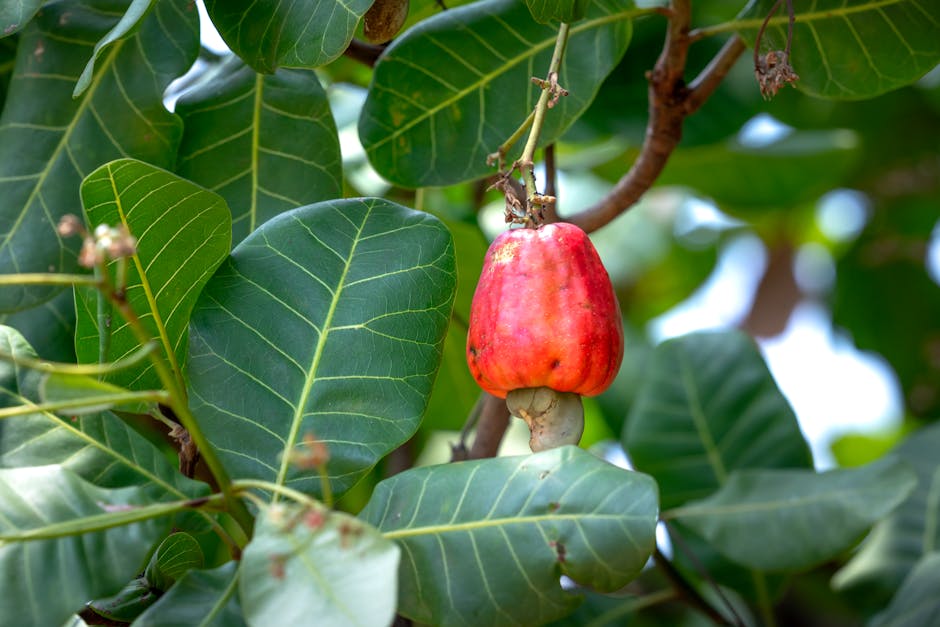
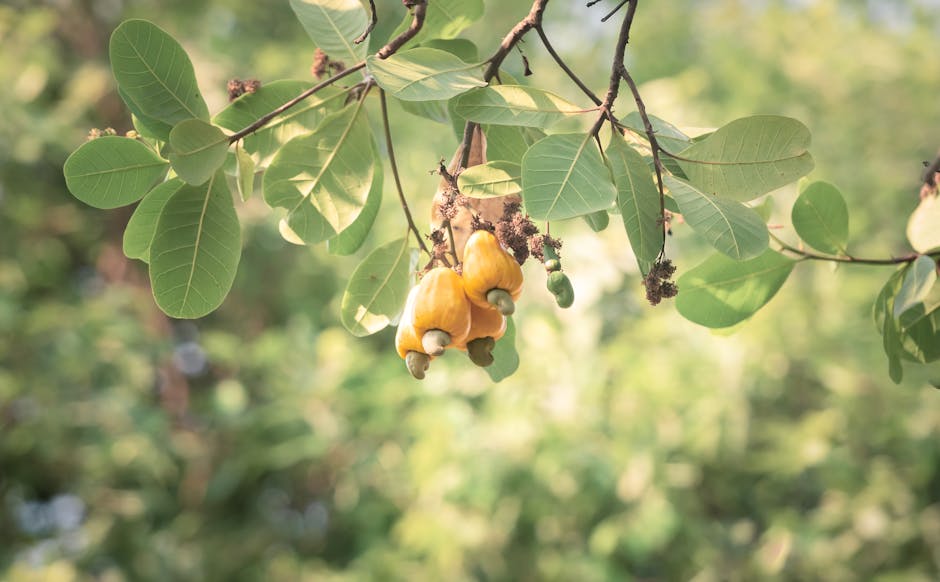
The second problem is the kernel. Raw nut leaves the East and gets cracked, graded and packed in Wayamba or Colombo, which captures roughly 60% of the export-FOB price. Smallholders see the lowest-margin part of the chain. Meanwhile the cashew apple — about 8–9 times the weight of the nut — is left to rot in the field because there's no fermentation infrastructure nearby.
The third problem is who's selling. Almost every kilogram of raw nut from Sammanthurai goes through one of three brokers, none of whom is a co-op member, none of whom shares grading data with the farmer. That's not a value-chain. It's a queue.
What the project actually does
Five years, three layers, one cooperative spine.
Layer 1 — Production (Y1–Y3). Establish two grafted-clonal nurseries (Ampara and Kantale) producing 200,000 plants a year. Replant 4,000 ha across 6,500 households with intercrop pulses for the first three years so families aren't waiting on a tree-crop income alone. Pair every planting GN division with a soil-testing baseline so fertiliser advice is real, not generic.
Layer 2 — Processing (Y2–Y4). Six women-led processing units come online: two in Sammanthurai, one each in Akkaraipattu, Kalmunai, Muttur and Kantale. Each handles 240 t raw-nut per year, employs about 60 women in steam-cooking, cracking, peeling, grading and vacuum-packing. HACCP certification by Y3.
Layer 3 — Market (Y3–Y5). A single export-licensed apex cooperative consolidates volume, gets organic + Fair Trade certified, and signs three-year off-take MoUs with a Canadian importer and two EU buyers we've already had preliminary talks with.
- Cashew apple side-stream: a small fermentation pilot in Akkaraipattu turning waste into bottled RTD wine, channeled through a separate cluster project (see C1 pitch).
- Microfinance debt audit before any household signs up — projects that ignore this fail.
Market & demand
Global tree-nut demand is up ~6% CAGR over the last decade. Cashew specifically has held a stronger CAGR than almonds or pistachios — about 8% — driven by snacking, plant-based dairy substitutes, and food-service buyers in North America and Europe.
Sri Lanka's own demand is the easier number to chase first. The country imported roughly 12,000 t of cashew kernel last year at an average CIF of USD 6.20/kg. That's a USD 75M domestic market sitting wide open for any producer who can offer SLSI-certified, traceable kernel at a competitive price.
The export upside lives in two niches. First, smaller-grade kernel (W320, W450 splits) where Indian and Vietnamese exporters won't compete on small volumes — Sri Lankan single-origin can. Second, organic-certified kernel at a 35–45% premium over conventional, paid by EU and Canadian retailers.
The risk to the market story is global price volatility — kernel FOB swung from USD 9.50/kg in 2017 to USD 5.40/kg in 2020. The mitigation is forward contracting and the apex cooperative's bargaining strength, not optimism.
Who benefits, and how
Direct: 6,500 smallholder households across Ampara (Sammanthurai, Akkaraipattu, Pottuvil), Trincomalee (Kantale, Muttur, Kuchchaveli) and the Batticaloa interior. About 38% Tamil, 41% Muslim, 21% Sinhala — close to the underlying ethnic mix of the dry-zone cashew belt.
Processing employment: 360 women on permanent payroll across six units, plus around 250 seasonal pickers and graders. War-widow households are explicitly prioritised in the recruitment criteria for two of the six processing units.
Indirect: roughly 1,400 households touched through the apple-stream pilot, plus nursery employees, transport contractors, and the apex-cooperative staff. The local school of agriculture in Trincomalee takes 30 students a year on the project's industrial-attachment programme.
Impact across 20 lenses
Every project on this site is scored against the same 20 lenses. For each one we say how the project moves the needle, not just whether it does.
01. Rural Development
Core · 3/3Re-builds the dominant value chain across three Eastern districts; 6,500 households see year-round income from a previously dormant tree crop.
02. Women Empowerment
Core · 3/3360 permanent women jobs across six processing units, with 30%-women board quorum at apex cooperative. War-widow priority for two units.
03. Poverty Reduction
Core · 3/3Average household cashew income lifts from USD 280/yr to USD 1,150/yr by Y5; debt-to-income ratio targeted to fall by 35%.
04. Employment Generation
Core · 3/3360 women on permanent processing payroll plus 250 seasonal graders; 12 apex-cooperative jobs and 30 nursery posts.
05. Environmental Sustainability (ESG)
Direct · 2/3Drought-tolerant tree crop, no irrigation, nitrogen-fixing pulse intercrop. Apple-stream diverts 18,000 t/yr from open decay.
06. Climate Change Adaptation
Direct · 2/3Cashew tolerates DL1/DL2 drought stress better than seasonal crops. Diversifies household income away from rainfed paddy single-cropping.
07. Economic Development & SME Growth
Core · 3/3Six new processing MSMEs, one apex-export entity, ~20 ancillary service businesses (transport, nursery, machinery hire).
08. Export Development & Trade
Core · 3/3Direct off-take MoUs with Canadian + 2 EU buyers; organic + Fair Trade certified; USD 3.2M/yr export by Y5.
09. Technology & Innovation Integration
Direct · 2/3QR-coded farmer-to-bag traceability; standardised grading SOPs; mobile-based extension. Tech is appropriate, not flashy.
10. Capacity Building & Skills Development
Core · 3/3NVQ-3 in food processing for 360 women; agronomy training for 6,500 farmers; co-op governance training for 80 board members.
11. Public–Private Partnerships (PPP)
Direct · 2/3Joint financing with regional bank; SLSI for HACCP audit; Department of Export Agriculture for certification; two private exporters for off-take.
12. Social Inclusion
Direct · 2/3Multi-ethnic co-op governance (38% Tamil, 41% Muslim, 21% Sinhala households). War-widow prioritisation in processing recruitment.
13. Infrastructure Development
Direct · 2/3Six processing units (240 t/yr each), two grafted-clonal nurseries, one bulk handling and packing facility at the apex cooperative.
14. Financial Sustainability & Revenue Model
Core · 3/3Processing units cost-recover from Y2; apex co-op holds 4% trading margin; 18-month reserve survives a 25% price shock.
15. Measurable Impact (KPIs & Outcomes)
Core · 3/3Three-layer MEL (output/outcome/impact) with HIES-comparable income methodology and delayed Y7 sustainability visit.
16. Alignment with Donor Priorities
Core · 3/3Maps to gender equality, climate-resilient agriculture, inclusive trade and SME formation — the standard global-donor priority quartet.
17. Scalability & Replicability
Core · 3/3Processing SOP and apex-co-op model open-sourced at programme end; replicable in Mannar, Puttalam, Anuradhapura dry zones.
18. Risk Assessment & Mitigation
Direct · 2/3Forward contracting reduces price-shock exposure; intercrop pulses hedge the 3-year tree-crop maturation income gap.
19. Innovation & Competitive Advantage
Direct · 2/3Institutional innovation (cross-district, multi-ethnic apex co-op) is the real distinctiveness, not the technology.
20. Community Impact & Social Value
Core · 3/3Spillover into transport, school attachments, and apple-stream side products. Multi-ethnic governance is a social-cohesion lever in itself.
KPIs & targets
Financial model & sustainability
The grant component carries productive infrastructure, training and certification — the things the market won't pay for. The processing units operate on a cost-recovery basis from Year 2 and break even at the unit level by Year 3. The apex cooperative is structured to retain a 4% trading margin on every kilogram exported, plowed back into working capital, member dividends and a replanting reserve.
Revenue at steady state (Year 5):
- Processing unit gross revenue: USD 1.45M/year across six units
- Apex cooperative export turnover: USD 3.2M/year
- Member dividend: average USD 220/household/year on top of farmgate income
The sustainability test is whether the apex cooperative can survive a 25% price shock without donor support. The financial model shows it can, with an 18-month reserve, provided forward-contracting discipline is maintained.
Innovation & technology
Nothing in this project is genuinely novel as technology. Grafted cashew is standard. Steam-cooking units have been around for forty years. The innovation is institutional, not technical:
- A single apex co-op that consolidates raw nut from multi-ethnic GN divisions across three districts — politically harder than it sounds, but the precedent (NAFSO fisheries co-op in Negombo) shows it's possible.
- Smartphone-based traceability from the individual tree to the export bag, using QR-coded farmer-IDs and a lightweight blockchain ledger (sister pitch in the digital-agtech cluster).
- Forward-contracting with EU buyers as the default, not the exception, with the co-op holding the price-volatility risk on behalf of members.
Partners & implementation
Public partners: Department of Export Agriculture (planting material, certification), Department of Agriculture (extension), Industrial Development Board (processing-unit licensing), Sri Lanka Standards Institution (HACCP audit), Provincial Council Eastern (land and ranking of GN divisions).
Private partners: two named Colombo exporters with existing kernel relationships in EU markets; one Canadian importer specialising in organic snacking nuts. A regional bank line for processing-unit working capital, partially guaranteed by the project's revolving fund in Years 1–3.
Community partners: the apex cooperative (member-owned, one-member-one-vote regardless of share), the six unit-level women's processing co-ops, and the Cashew Growers' Society of Eastern Province if it can be re-registered (it lapsed in 2018).
Monitoring, evaluation & learning
Three layers of measurement, not one.
- Output layer: hectares replanted, plants distributed, women trained, units commissioned, certifications granted. Monthly tracking via the same farmer-ID system that runs traceability.
- Outcome layer: yield per hectare (sample baselines + Year 3 + Year 5), farmgate price received, processing-unit profitability, export volume, women's earned income.
- Impact layer: household income (HIES-comparable methodology), women's decision-making index (validated tool, paired pre/post), debt-to-income ratio (because we expect cashew income to reduce microfinance dependency by Y4).
Independent mid-term evaluation in Y3, final evaluation Y5, and one delayed-evaluation visit in Y7 to test for after-the-money sustainability.
ESG safeguards
Environmental: cashew is drought-tolerant by design — no irrigation needed in DL2. Intercrop with pulses fixes soil nitrogen. Apple-stream processing diverts an estimated 18,000 t of cashew apple from open decay per year by Y5. No agrochemical-intensive operations. Carbon-stock baseline taken at planting; certified-organic conversion completes by Y4.
Social: explicit FPIC process in every GN division before planting. Land-tenure due diligence on every plot (because the East has unresolved displacement claims and we won't enable land-grabs). Gender plan signed off by Women's Bureau. Independent grievance mechanism through Eastern University law clinic.
Governance: apex co-op bylaws require external audit, public annual report, and a 30%-women board quorum.
Donor alignment
The project maps tightly to common donor priorities — gender equality (women lead the processing layer, not the production layer alone), climate-resilient agriculture (cashew is the best dry-zone tree-crop choice we have), inclusive economic growth (Tamil-Muslim-Sinhala co-op governance), and inclusive trade (small-grade kernel niche that doesn't compete with major exporters).
For Canada specifically: cashew imports into Canada have grown faster than overall tree-nut imports for the last five years. The organic-snacking-nuts segment is the relevant beachhead. The project's certified-organic timeline (Y4) lines up with that buyer profile.
Risks & mitigation
| Category | Risk | L | I | Mitigation |
|---|---|---|---|---|
| Market | Off-take buyer withdraws or price collapse | 3 | 4 | Forward 3-year offtake contracts with EU + Canadian buyers; apex co-op holds 18-month price reserve; small-grade niche reduces head-on competition with India/Vietnam. |
| Climate | Drought / flood / cyclone disrupting implementation | 3 | 3 | Cashew is dry-zone-adapted; intercrop pulses cushion drought years; insurance budget retained for cyclone damage. |
| Land | Land tenure disputes blocking infrastructure siting | 3 | 4 | Title and tenure verification on every parcel before planting; project will not enable land claims with unresolved displacement disputes. |
| Gender | Backlash against women-led activities in conservative GNDs | 2 | 3 | Pre-recruitment FPIC with male household members in conservative GNDs; child-care voucher built into processing-unit operating cost. |
| Financial | Microfinance over-indebtedness undermining beneficiary uptake | 3 | 3 | Microfinance debt audit done at enrolment; project will not enrol households servicing >40% income-to-debt ratio without restructuring path. |
Scalability & replication
Two things scale, one thing doesn't.
What scales: the processing model (any 240 t/year unit can be replicated in Mannar, Anuradhapura, Puttalam dry zones with the same machinery package and SOP), and the apex-cooperative export model.
What scales partially: the planting protocol — different soils need different rootstock combinations. The Ampara DL2 protocol won't work unchanged in Mannar's DL1f.
What doesn't scale neatly: the women's processing employment model. It works in Sammanthurai because of a specific co-op governance culture and supportive Pradeshiya Sabha. Replicating it elsewhere needs a year of social mapping first. Honest about that.
Replication plan: at programme end, package the SOP, training curriculum and apex-co-op bylaws as open-source assets and offer them to Department of Export Agriculture for nationwide use.
Gallery